It's not remote working itself that's breaking your spirit. But what is, and how do you fix it?

very once-in-a-while my thoughts around some aspect of work and life change. First, this happens quietly. I'm not sure if these thoughts are 'normal' and if it is okay to share them. Then, eventually, some event will show me that I have been anything but alone with these thoughts; that many, if not most, around me have been going through a similar emotional journey. Last week, I've reached such a point again. The topic this concerns is, of course, remote working.
Within two days, I had several chance conversations with friends and colleagues who essentially played back to me how I felt: Fatigued. This gave me the chance to look at this problem from a few different angles. Below I wanted to share my thoughts on the issues discussed and what I think could be done, or should not be done, about them.
First very briefly: how did we get here? Earlier this year, everyone's working situation changed. Us office workers were sent home; our entire work life moved into the digital realm. Despite best efforts being made all around, and many key pieces for remote working already being in place, I remember struggling for the first week myself. Once equipment and digital tools were in place, however, I embraced this style of working. I hailed the newly gained freedoms and recaptured commuting time. And I was not alone in this.
Working remotely had appealed to me for some time and now I could finally enjoy all its benefits. All, with one crucial exception: freedom of movement. I always imagined myself working remotely from some beach in South-East Asia, from my parental home in Austria, or anywhere else where life was good, Wifi fast, and living costs cheap. Some of my friends did indeed end up in such a scenario - working out of an Airbnb on the mediterranean coast, taking dips in the ocean after a day's work was done. But even for those lucky few who achieved such a dream, it was not to last. Tax reasons forced everyone to return to the UK to earn their living there. Travel restrictions prevented anyone else from enjoying similar ways of work life later.
ndeed, 'a day's work' by old measures could be done much faster. In the olden days, I remember getting up for a coffee and ending in a half-hour conversation with a colleague in the micro-kitchen. I remember taking time for coffee chats with people I wasn't working with directly, just to maintain the relationship (right, I drank a lot of coffee). I remember shared lunches that transitioned into lengthy debates. And I remember impromptu announcements, fire drills, social events, and so much more. Sometimes, 'a day's work', real heads-down work, was a mere few hours. Often, I was unhappy about it.
But many of us didn't set our remote schedules in line with this, did we? Now, days looked very different: Work, for many happening almost entirely on Zoom, became more mentally taxing. And after the removal of all our interruptions - good and bad - the definition of the workday did not change. What was before a varied day filled with context changes and social interactions, was now a 9-6 day of sitting at the same desk (if you were lucky enough to have one at home), in the same chair, staring at the same screen. All. Day. Long.
I didn't pick up on this for a long time. As time progressed and teams adjusted, I was pleased about that 'extra productivity'. Recent experiences of heading back to the office for the occasional day reminded me that I was indeed still much more efficient than ever before. But it still didn't feel right.
Despite everyone's best efforts, cracks have started to show. We smile, make jokes, talk about our weekends, and organise team events. But occasionally, more frequently, we’ll have a bad day, feeling somewhat down and running on auto-pilot.
Then, when we finally admit that things don't feel right, we find an easy target to pin it on: remote working. Humans are social animals, we say. We are not made for this way of working.
argue that there is more at play here, and that remote working can still be saved, flourish even. What we experience is not remote working.
It is not: completing a day's worth of work in half the time and spending the rest of the day in a location and with the people of our choosing. It is not: staying away for maximum focus time and coming together with colleagues for workshops, coffee chats and social events.
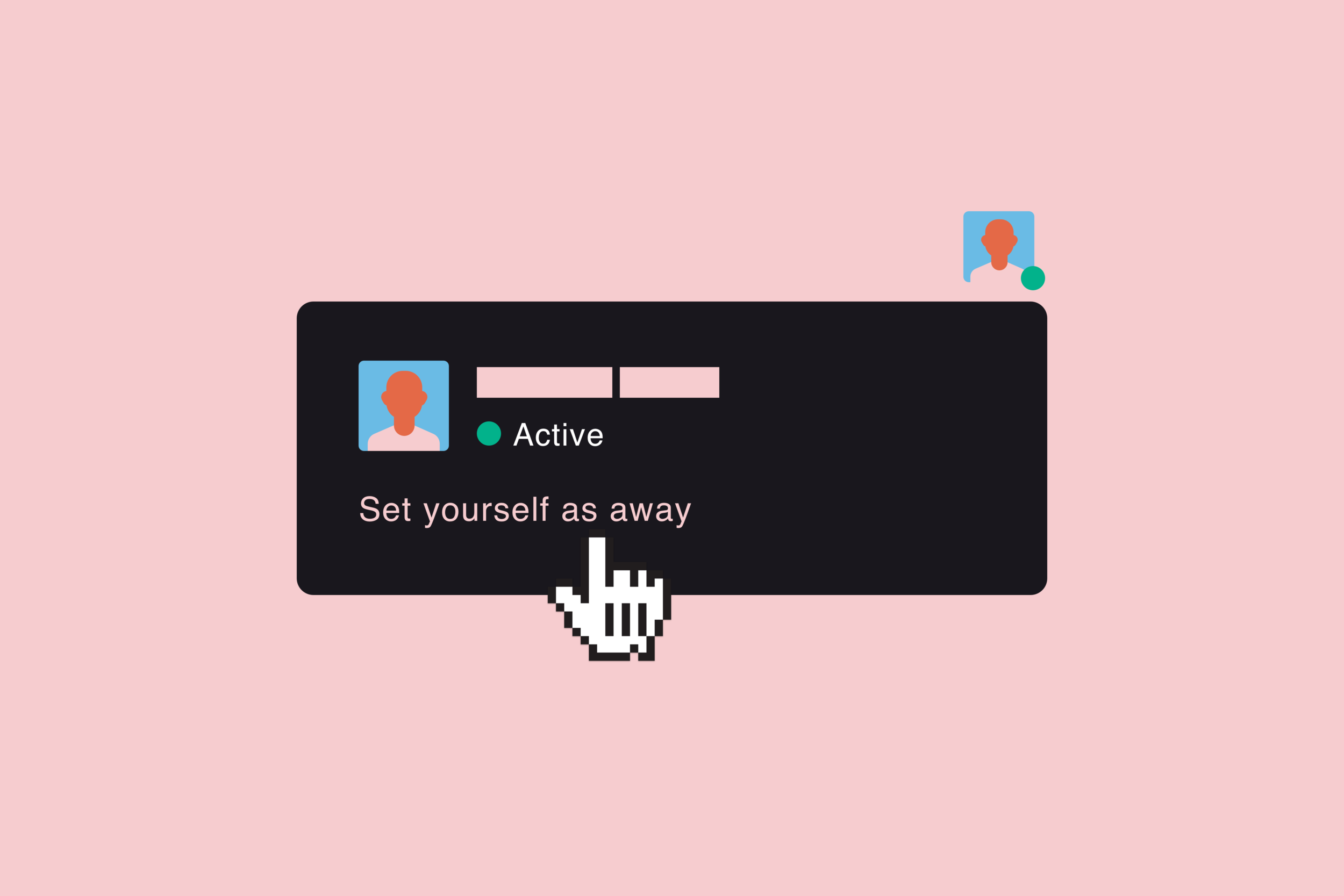
It is: Complete isolation. Monotony and loss of time as every week matches the next. It is a feeling of loss for all the things we postponed and couldn't do this year. It is being an employee, parent, partner, teacher, and much more all at once. It is life on hold. It is the lack of anything to tell your friends and colleagues about whenever you do get together, except for your thoughts on the most tiresome and persistent topic. It is losing the will to even make plans of any kind because you know changes in rules and regulations will kill them last-minute. It is being unable to see your loved ones or tell them when it might be possible to do so again. It is feeling guilty when getting up from your laptop for a few minutes for fear that someone will pick up on your 'inactive' Slack status. It is taking your laptop to the toilet because you haven't had five minutes between Zoom calls to have a toilet break. It is lunch breaks being taken up by Zoom lunches as a means to maintain social ties between coworkers without impacting on your 'productivity'. It is seeing your role models clearly feeling the same way and being unable to cope, making you lose even more hope. It is a lack of intellectual and creative stimulation, formerly the hallmark of living in a vibrant cultural centre of a city.
I'm not saying that all of these points apply to everyone - they are a collection of what others have told me about - or that this is anything but the tip of the iceberg of a list of things that are taking a toll. I am saying that an overall terrible experience may risk us oversimplifying when looking for causes and remedies.
hat many (most?) of us seemed to have done, was move our previous ways of operating into the digital world with as few modifications as possible, and expect to keep functioning as before. That would have been fine if we'd talked about a few weeks of this, but we are not. It's been too long, and it is time to review how we need to adjust. However, let's not conclude that just getting everyone back to the office will do the trick - note that many of the points above have little to do with work, or nothing at all.
If the above descriptions seem depressing, let me say that I am still optimistic and belief that we can make the best of a terrible situation and and come out the other side having made numerous innovative improvements to our lives. These are my thoughts in all brevity:
Change your routine. When work and life happen in the same space, it can be helpful to be creative with how you can continue to add new experiences or changes of context to your day. Go outside, meet people on the street, work from a park bench for an hour. Importantly, keep your breaks up. Go for a run, have a shower, walk the dog. Don’t feel ashamed about these things. We used to have lots of interruptions at the office, remember? Those are important for letting your mind breath a little. Nobody should be expected to be 100% productively sitting at their desk the whole day, and you shouldn’t expect that of yourself either. I used to feel very guilty for taking such breaks, but I know that they are a key element in living and working sustainably.
Rewrite the norms of synchronous communication and status indicators. Few things - at least for office workers - are so important that they can't wait for a few hours. I have started to set my Slack to do not disturb mode for two-hour chunks of time, spending the minutes thereafter to deal with any requests in bulk, but I am sure there are even better ways of doing this.
Forget about office hours - unless you don’t want to. As long as you get the job done, nobody should care about when you do it or how long it takes you to do it. Some find it easier to have a ‘work’ part of the day and a ‘personal’ part of the day to substitute the geographical separation between these two spheres. But it should be optional.
For small groups, keep social events as distanced in-person meetings, instead of or in addition to 'Zoom-fun' (obviously official guidelines permitting).
Invest in tooling. With some delay, we are now seeing more and more software (and hardware) come on the market to make this situation easier. Make sure teams have access to those that make the biggest difference.
Let teams sort out their schedule. The hybrid model of some people working remotely and others at the office rarely worked for anyone pre-lockdown and it won't work once we are allowed back into our offices. We need to find a balance between meeting time and self-managed time that is observed by everyone who is working together on a daily basis. For example, you may declare Tuesdays and Thursdays 'meeting days' where you need everyone to be available and reachable. In the future, those could be the days when you meet physically. The rest of the time you may choose to leave each other alone and to self-manage their work schedule. This way, you'll also never wait more than a day to discuss important issues, which - in my view - is plenty fast enough for most teams.
Take control of your calendar and really question which meetings actually require your presence.
In a multi-national organisation, enable staff to work from any country you have a presence in for extended periods of time, allowing for true location independence - a great perk!
Take a break. If you’ve been saving up holidays for when international travel is possible again, I’d say don’t hold your breath, and get yourself the break your mind needs with a good-old staycation. Consider changing old models of taking many days at a time to go somewhere far away, but try having more extended weekend breaks closer to home.
Lastly, whatever your organisation decides on when it comes to ways of working, it should be communicated clearly to everyone what is considered acceptable and what isn't. Too much anxiety is caused by agonising over how ones behaviours will be perceived by others. That anxiety could go away immediately if norms are clear to everybody.
I believe that all of these suggestions would still drive positive change even compared to our old ways of working and trying them now could help set the foundations for the post-pandemic future.
Keep sharing, be vulnerable, be honest, and let’s not write off remote working just yet. I think it has a bright future ahead.